What Is the AI Zombie Trend?
The AI zombie trend turns two photos into a short post-apocalyptic romance. What the format is, why the four-shot hook works, and its variants.
 AI Zombie Video Team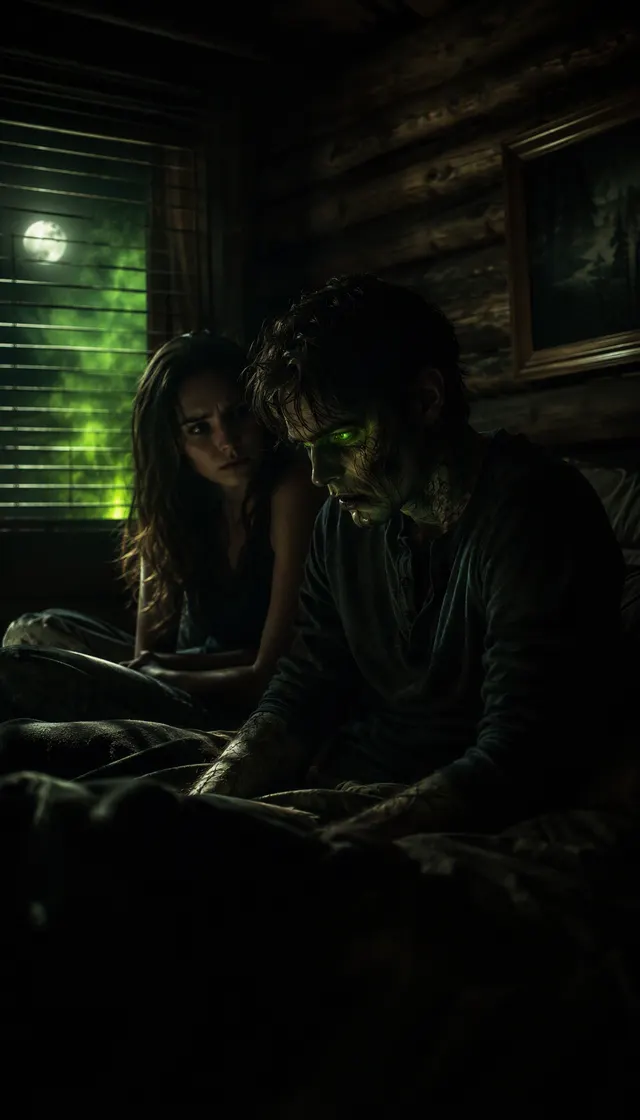
The AI zombie trend is a video format where two ordinary photographs become a short post-apocalyptic film. One photo is where the story starts and the other is where it ends, and the film plays the four shots between them: a gun raised and then let fall, arms opened in invitation, a leap that hard-cuts into an embrace. It reads like the trailer for a romance that went wrong, and it runs about as long as a song hook.
The format, reduced to its parts
Every version that works has the same four ingredients:
- Two source photos. A pair with a relationship in it — a couple, a person and a pet, two friends, a party of guests who share one frame.
- A choice instead of a fight. One character aims, hesitates, and lowers the weapon; the other closes the distance. The turn is emotional before it is physical.
- A cinematic grade split in two. Cold and desaturated while the gun is up, golden and luminous after the cut. The look is horror-romance rather than horror, which is why these clips feel tragic instead of gruesome.
- A score. Audio arrives with the picture instead of being bolted on afterwards, and that is what separates these films from the slideshow morphs they resemble.
On AI Zombie Video that means two photos in and one 15-second, 720p film out, with generated audio and no watermark.
Why the two-photo hook works
The format runs on a promise the viewer reads instantly: you have seen the first frame, now watch how we reach the second.
It survives a silent scroll. The opening frame is a normal photo, so the clip starts out looking like someone's post rather than an advertisement, and the payoff lands even with the sound off.
The tension has one answer. A viewer is not weighing an unknown story — they are waiting on a single visible question, and one question is short enough to resolve in a few seconds.
It invites a tag. Nearly every pair is two subjects who know each other, so the natural comment is a friend's name and the natural share goes to the person in the photo.
It loops. The film runs from the last frame back to the first, so a replay returns you to the ordinary photo. The ending is a doorway back into the beginning, which is what keeps people watching twice.
Quiet horror also makes the format portable: a couple on a sofa, an owner and his dog, two friends in a kitchen — photos you would really post, none of which expire after October.
The story variants
The same pipeline carries several flavours, and the one you want depends on who is in your photos.
Zombie Couple is the emotional read: the survivor cannot bring themselves to fire, opens their arms, and takes the leap as an embrace. Zombie Pet swaps the partner for an animal that stays close to its owner, and the tenderness is the hook. Zombie Friends plays the same refusal between two friends, which lands funnier precisely because nobody expects it. Halloween Party keeps the shot grammar and puts it in costume, so the reveal reads as the one party trick nobody dressed up for.
Each variant ships with its own pacing and colour grade, so your pair of photos decides the mood more than any control panel. The examples wall collects frames from all four.
Choosing a variant that fits
Match the emotion, not the headcount: a couple photo in pet mode loses the point, two friends in couple mode looks like a mistake. If your pair has a location worth keeping — a porch, a cabin, a kitchen at 2 a.m. — choose the variant where the setting carries meaning, because the model holds onto backgrounds longer than you expect. The tutorial covers choosing the pair itself.
What made this possible
Two capabilities turned a niche effect into a repeatable format. The first is first-and-last-frame input: a model accepts a starting image and an ending image and generates the travel between them. That is a two-photo trend waiting to happen, and it is why the format needs no prompt — the pictures do the casting and the set design. ByteDance's Seedance page documents a selectable 4 to 15 second range, native audio, and exactly that input mode. Google's Veo documentation describes clips of around eight seconds at 720p, 1080p, or 4K with native audio, first and last frame input, and both 16:9 and 9:16.
The second is audio generated with the video, so a film arrives with its atmosphere already scored and nothing assembled by hand afterwards. That is why the trend looks like cinema instead of a filter.
Making one is choosing two photos that line up and picking a story. The generator takes both images without an account — only rendering needs one — and a film costs 20 credits from one-time packs priced as low as $2.10 per film. See the pricing before deciding how many versions to try.